 (2).png)

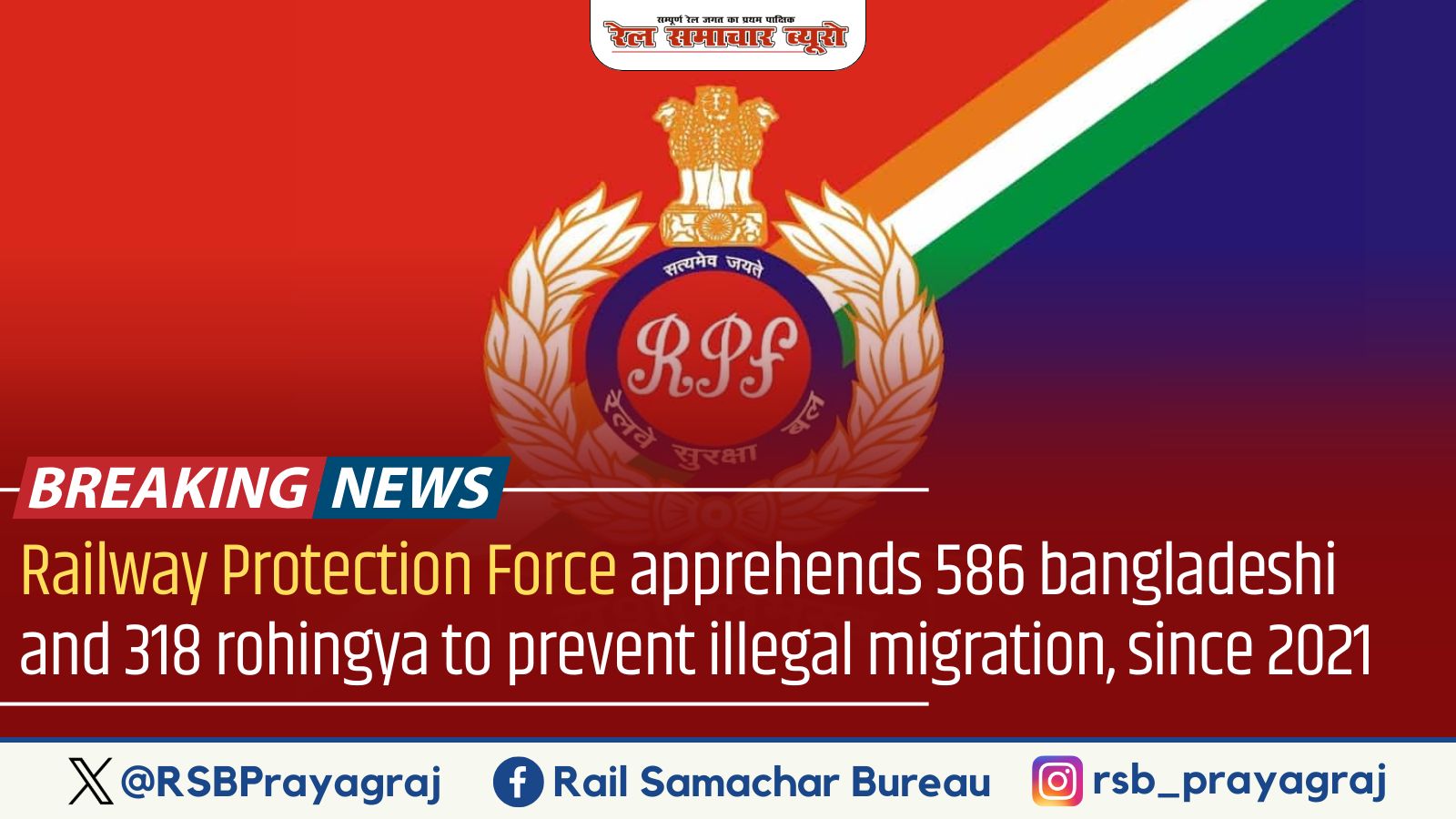
The Railway Protection Force (RPF) has successfully apprehended 916 individuals, including 586 Bangladeshi nationals and 318 Rohingyas, since 2021, highlighting their dedication to safeguarding India’s national security. In June and July 2024, RPF apprehended 88 Bangladeshi and Rohingya migrants in areas under the Northeast Frontier Railway (NFR). Some of these individuals confessed to entering India illegally and were intercepted while traveling by train to destinations such as Kolkata.
In October 2024, reports highlighted that, despite increased security measures along the Bangladesh border, illegal migrants continue to infiltrate India using Assam as a transit route, with railways being their preferred mode of travel to reach other parts of the country. These incidents expose the challenges faced by Indian authorities in securing railway networks against illegal infiltration. The use of railways facilitates the movement of infiltrators across states and complicates detection and prevention efforts.
To address this growing issue, the RPF has intensified its efforts by collaborating with key security agencies such as the Border Security Force (BSF), local police, and intelligence units. This inter-agency approach has significantly enhanced operational efficiency, enabling swift identification and detention of illegal migrants.
However, despite its significant contributions, the RPF is not directly empowered to prosecute apprehended individuals. Instead, detained persons are handed over to the police and other authorized agencies for further legal action.
Recent political turmoil in neighboring countries like Bangladesh and Myanmar, coupled with socio-religious and geopolitical factors, has led to an influx of individuals seeking refuge, employment, and shelter within India's borders. This remains a national security concern. Illegal migrants often use railway networks to transit through regions like Assam and Tripura en route to other parts of India, making the issue even more complex. The RPF plays a crucial role in addressing this challenge, ensuring national security while preventing exploitation of these vulnerable individuals.
Source/PIB & RSB



_page-0001.jpg)