 (2).png)

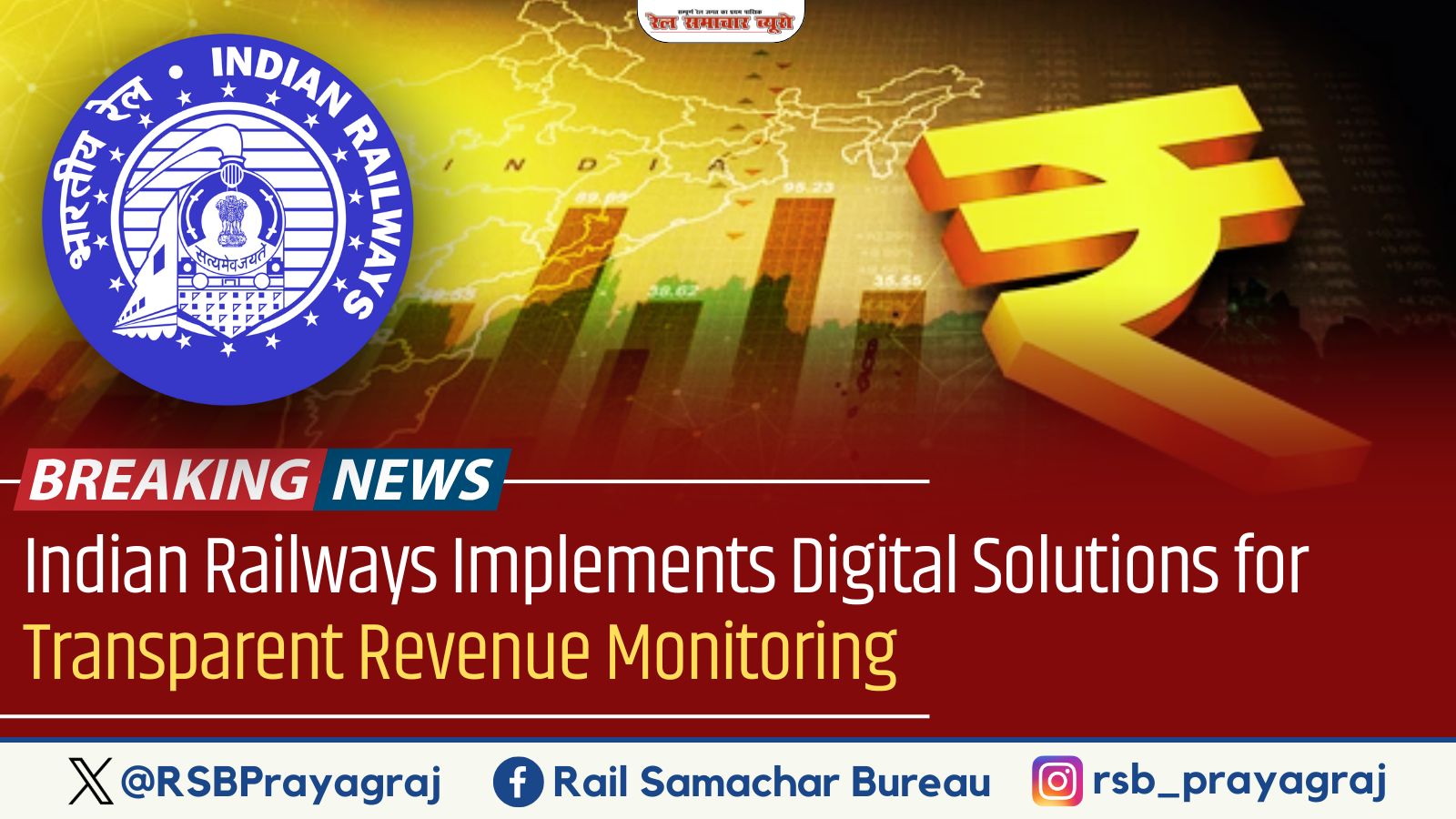
Indian Railways Strengthens Revenue Monitoring and Workforce Optimization
Indian Railways has established a robust mechanism for continuous monitoring of revenue generated at each railway station. Stations are classified into Non-suburban Grade (NSG1-6), Suburban Grade (SG1-3), and Halt Grade (HG1-3) based on passenger earnings and footfalls.
Revenue Sources at Railway Stations
Indian Railways earns revenue from multiple sources, including:
- Passenger Earnings: Comprising reserved ticket sales via the Passenger Reservation System (PRS) and unreserved ticket sales through the Unreserved Ticketing System (UTS).
- Freight Earnings: Revenue from goods transportation, demurrage, and wharfage charges.
- Other Coaching Earnings: Income from parcel and luggage services, platform ticket sales, postal haulage, cloakroom charges, and demurrage or wharfage on parcels.
- Sundry Earnings: Includes revenue from rent, leased parking lots, catering services, commercial land utilization, advertisements on coaches and stations, and other commercial activities.
Designated officials such as Commercial Inspectors and Travelling Inspectors of Accounts supervise revenue collection at the station, division, and zonal headquarters levels.
Digital Applications for Revenue Management
To ensure transparency, accuracy, and efficiency, Indian Railways utilizes advanced digital applications developed by the Centre for Railway Information Systems (CRIS):
- Passenger Reservation System (PRS)
- Terminal Management System (TMS)
- Parcel Management System (PMS)
- Freight Operations Information System (FOIS)
- Traffic Accounts Management System (TAMS)
- Online Payment System and e-Payment System
- e-Balance Sheet
- Indian Railways E-Procurement System (IREPS)
These digital platforms play a crucial role in automating financial transactions, tracking revenue, and streamlining operations.
Workforce Optimization in Indian Railways
Indian Railways considers human resources a vital asset and regularly assesses workload conditions to optimize manpower utilization. This is achieved through:
- Continuous Review of Yardsticks: The workload of each employee is assessed periodically.
- Work Studies and Benchmarking: Conducted to rationalize manpower and ensure efficient workforce distribution.
- Compliance with Hours of Employment Regulations (HOER): Employee workload is regulated under HOER, ensuring job classification and deployment are updated based on job analysis.
This strategic workforce management allows Indian Railways to efficiently deploy manpower for new assets and organizations while ensuring optimal use of its existing human resources.
The information was provided by Union Minister of Railways, Information and Broadcasting, and Electronics and IT, Shri Ashwini Vaishnaw, in a written reply to the Lok Sabha on 02nd April, 2025.
Source/PIB
_page-0001.jpg)