 (2).png)

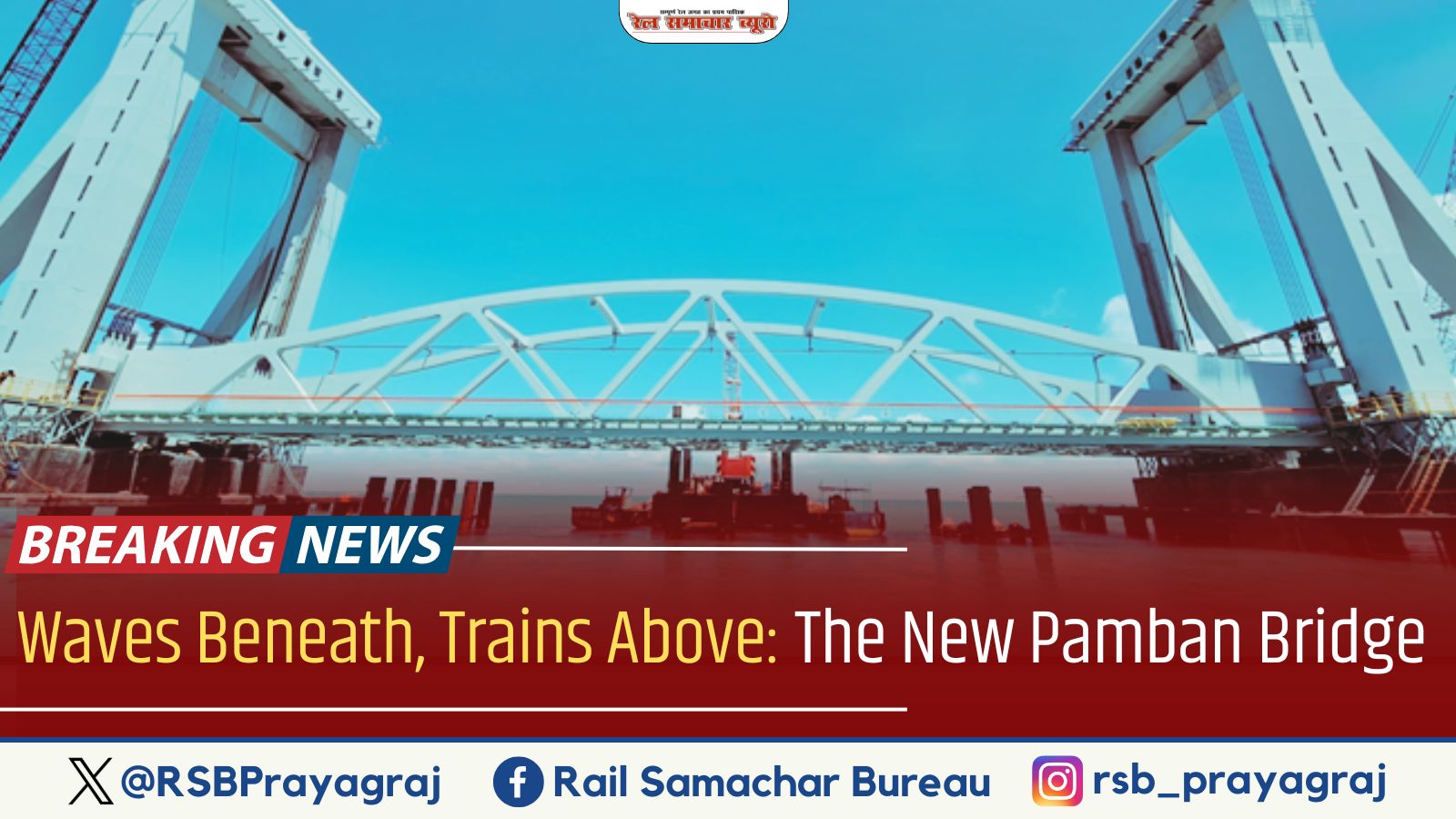
The Pamban Strait, separating mainland India from Rameswaram Island in Tamil Nadu, now hosts India’s first vertical-lift railway sea bridge—a groundbreaking replacement for the 110-year-old Pamban Bridge. More than a structure, it’s a tribute to both history and progress.
A vertical-lift railway sea bridge has a section in the middle that can rise like an elevator, allowing ships to pass safely underneath. Once the vessels move through, the bridge lowers again, enabling trains to continue their journey—seamlessly accommodating both rail and marine traffic.
Built just 27 meters from the original bridge, the new one spans 2.07 kilometers and features a 72.5-meter-long vertical lift span that rises 17 meters—an Indian Railways first. Constructing it came with challenges: turbulent waters, unpredictable winds, and a complex seabed. Engineers placed over 330 deep piles, used marine-resistant coatings, and reinforced the structure with stainless steel. While it currently supports a single track, its base is strong enough for a second in the future.
Beyond engineering, the bridge holds deep cultural value. Near Rameswaram, where Ram Setu is said to have begun, the bridge improves access for pilgrims, boosts local connectivity, and offers new economic opportunities.
Smart systems, including a wind-speed sensor that halts trains when gusts exceed 58 kmph, and an Atmospheric Water Generator that provides drinking water from humid air, ensure safety and sustainability.
As trains glide across this bridge, they cross more than water—they traverse a century of legacy and step into the future. The new Pamban Bridge is not just a marvel of engineering but a powerful reminder that progress respects the past while building tomorrow.
Source/RSB



_page-0001.jpg)