 (2).png)

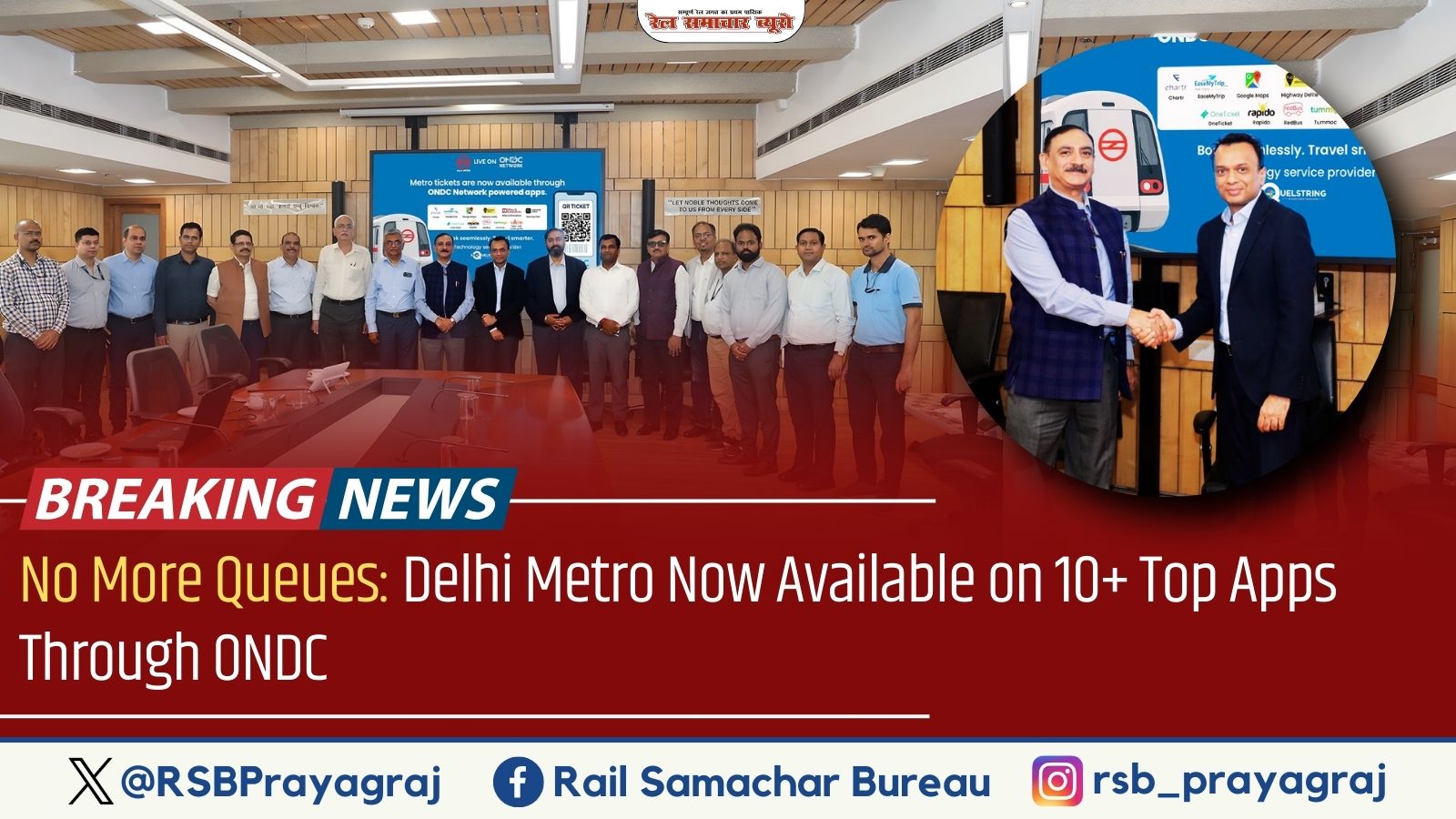
In a landmark move towards building open digital infrastructure for urban mobility, the Delhi Metro Rail Corporation (DMRC) has become the first large-scale urban transit system in India to integrate with the Open Network for Digital Commerce (ONDC).
Following a soft launch in November 2024, DMRC is now live on the ONDC Network, enabling metro ticket bookings via more than 10 widely-used consumer apps such as Chartr, EaseMyTrip, Google Maps, Highway Delite, Miles & Kilometres (via Telegram), NammaYatri, OneTicket, Rapido, Redbus, Tummoc, and Yatri Railways.
With over 6.5 million daily passengers, this integration allows users to access metro services without downloading a dedicated app—simplifying travel and improving accessibility. Through a single-point integration enabled by Technology Service Provider SequelString AI (SAI), metro tickets can now be purchased via mobility apps, journey planners, and even a Telegram bot.
The move benefits both inter-city and intra-city commuters. For example, a traveler arriving in Delhi by Redbus from Jaipur can directly book a metro ticket from ISBT Kashmere Gate to any onward destination. Similarly, an intra-city commuter can plan their entire journey—from a bike taxi via Rapido to the metro and beyond—in one go.
Dr. Vikas Kumar, Managing Director, DMRC, said:
“This partnership with ONDC is part of our effort to simplify metro travel and bring it into the digital spaces people already use every day. By offering ticketing through multiple familiar apps, we are removing the friction that often comes with transit access.”
Sh. Vibhor Jain, Acting CEO and COO at ONDC, added:
“The integration of DMRC into the ONDC Network illustrates how open digital ecosystems can enable broader, more seamless access to public services. By connecting once to the Network, DMRC can now offer ticketing across a range of everyday apps without needing custom integrations for each one.”
This collaboration marks not just a technological leap, but a broader shift toward embedding public transport into everyday digital routines—making metro access more seamless, inclusive, and commuter-friendly.
Source/DMRC


.png)
.jpg)
_page-0001.jpg)